- AI Trailblazers
- Posts
- AI Turned the Lights On: Why Leadership, Not Tech, Is Now the Bottleneck
AI Turned the Lights On: Why Leadership, Not Tech, Is Now the Bottleneck

AI’s next chapter isn’t about smarter models or shinier tools, it’s about organizational reckoning. Across teams, performance reviews, and customer experience, a common pattern is emerging: AI is exposing where companies move too slowly, trust too blindly, and confuse activity with progress. From Meta redefining what “doing your job” means, to teams quietly losing trust in their own judgment, to CX leaders realizing speed beats scale, these stories point to the same truth. AI isn’t just changing how work gets done, it’s forcing leaders to redesign how decisions, accountability, and human judgment actually function in an AI-mediated world.
AI Trailblazers is partnering with POSSIBLE 2026 to build the AI-Verse stage, a dedicated experience designed to be on the same caliber as our AI Trailblazers Summits. As part of this collaboration, AI Trailblazers will take center stage at the newly created AI Verse at the Fontainebleau, the heartbeat of the event, April 27 to 29 in Miami Beach, Florida.
It’s a universe where marketers and innovators can not only explore what’s next in AI but also shape it responsibly and strategically. We’re welcoming speakers, partners, and guests who are shaping this space to join us. Please contact us to learn more.
“The AI Said So” Replaces Thinking: The Hidden Cost of AI at Work

According to hbr.org, AI is supposed to make teams faster, smarter, and more productive. But beneath the surface, something more subtle and dangerous is happening. As AI becomes embedded in everyday work, it’s reshaping how teams trust, question, and coordinate with one another, often in ways leaders don’t immediately see. This summary explores why AI failures hit teams differently than human ones, and why the real work of AI adoption is less about tools and more about how people work together.
AI is quietly breaking team trust, not just workflows. As AI tools deliver confident but incorrect recommendations, teams experience “trust ambiguity” where people aren’t sure whether to trust the AI, themselves, or each other. This erodes psychological safety and makes people less willing to question outcomes or speak up when something feels off.
AI errors damage teams differently than human mistakes. Human errors invite discussion, context-sharing, and collective learning that often strengthens collaboration. AI errors, by contrast, are opaque and hard to interrogate, short-circuiting sense-making and leaving teams with lingering doubt and no clear way to prevent repeats.
Coordination and accountability suffer when AI joins the team. Research shows AI presence can reduce human effort, disrupt communication, and weaken coordination, leading to lower overall performance. Overconfidence in AI capabilities encourages cognitive offloading, creating a “human-AI oversight paradox” where no one feels fully responsible.
The fix isn’t better tech, it’s better teaming. Leaders must treat AI integration as a learning and team-development challenge, not a deployment exercise. Psychological safety, visible learning from failure, clear override protocols, and intentional human connection are what allow human-AI teams to actually outperform, rather than quietly unravel.
AI Trailblazer Takeaways: The biggest risk of AI at work isn’t bad output, it’s silent dysfunction. When teams stop debating, double-checking, and owning decisions because “the AI said so,” performance looks efficient right up until it fails expensively. Leaders who treat AI as a productivity upgrade instead of a social system change will miss the real cost: eroded judgment, diluted accountability, and teams that move faster but think less. The winners won’t be the companies with the best models, they’ll be the ones that redesign trust, decision rights, and teamwork for an AI-mediated world.
The End of Optional AI: How Meta Redefined “Doing Your Job”

according to eWEEK.com, AI adoption just crossed a line from encouragement to expectation. What was once framed as experimentation is now being operationalized, measured, and rewarded like any other core competency. Meta’s move signals a shift many companies have been tiptoeing around but avoiding out loud. The message is clear: using AI is no longer optional, it’s part of how performance itself is defined.
Meta has made AI usage a formal performance metric. What started in 2025 as a request to document “AI-driven impact” is now fully embedded in employee evaluations. In 2026, AI proficiency directly affects promotions, bonuses, and long-term career paths.
Managers now assess how effectively employees use internal AI tools. These include Meta’s coding assistant Metamate and other productivity bots designed to speed up development and improve quality. The expectation is simple and brutal: if AI exists and you’re not using it, you’re leaving performance on the table.
Not everyone is thrilled, but leadership is unmoved. Some employees see the policy as micromanagement, especially in roles where AI is less obviously applicable or among veterans used to older workflows. Meta argues the push is justified, pointing to real business gains like a 3.5% lift in Facebook ad clicks and uneven internal adoption that needed a hard nudge.
Meta is pairing pressure with training, tracking, and incentives. Employees get AI training, gamified challenges like the “Level Up” badge system, and even AI-assisted tools to help write performance reviews. At the same time, dashboards track AI usage across teams, turning adoption into a measurable, managerial signal that the rest of Silicon Valley is now watching closely.
AI Trailblazer Takeaways: Meta isn’t just betting on AI, it’s redefining what “good performance” means in an AI-native company. The real shift here isn’t the tools or the dashboards, it’s accountability: AI fluency is being treated like coding literacy or leadership skills, not a nice-to-have. This sets a precedent other companies will quietly study, then reluctantly copy, because once productivity gaps become measurable, culture arguments tend to lose. The uncomfortable truth is this: in the next wave of work, opting out of AI will look less like a preference and more like underperformance.
The End of Knowing, the Age of Acting: How CX Winners Move Faster Than Customers

According the cmswire.com, Most companies think they’re losing the CX race because they don’t have enough data. They’re wrong. The real gap is how quickly organizations can interpret what’s happening and respond while the customer is still in the moment. This shift reframes customer experience from a reporting function into a real-time operating capability, where speed, structure, and human judgment matter more than volume.
Customer experience is no longer a data problem, it’s a speed problem. Most companies are drowning in signals but still treating insights like historical artifacts instead of live navigation tools. Winning CX comes from signal architecture that interprets behavior in real time and acts immediately, not from bigger dashboards or deeper data lakes.
Decision velocity has replaced reporting cycles as the real competitive advantage. Monthly reviews and quarterly plans collapse under AI-speed markets where behavior shifts by the hour. Strategy now lives in continuous sense–decide–act loops powered by micro-experiments, predictive analytics, and constant optimization.
AI only creates value when it is operationalized, not observed. Real-time data ingestion, unified customer profiles, and AI-driven decision engines must work together to trigger action in the moment. Without this plumbing, even advanced AI models become passive observers instead of active drivers of growth.
The future belongs to humans-in-the-loop organizations. AI should act as a decision co-pilot while humans own judgment, ethics, creativity, and brand trust. Companies that build cross-functional insight squads and clear governance will turn AI discoveries into action, while others keep admiring traffic instead of moving through it.
AI Trailblazer Takeaways: The CX leaders of the next decade won’t win by knowing more, they’ll win by deciding faster. Data advantage has commoditized; decision advantage has not. Organizations that still treat insight as something to review instead of something to act on in real time will keep explaining missed moments with prettier dashboards. The real differentiator is operational courage: redesigning teams, decision rights, and workflows so AI and humans can move together at the speed customers already expect.
Quote of the Week
“AI is an incredible tool for learning and creativity, but we must remember it’s guidance—not a substitute for discipline, effort, and independent thinking.”
— Narendra Modi, during Pariksha Pe Charcha 2026, emphasizing responsible and balanced use of AI in education.
Magnificent 7
Brands are using generative AI to make fun of generative AI (marketingbrew.com)
Anthropic, OpenAI rivalry spills into new Super Bowl ads as both fight to win over AI users (finance.yahoo.com)
Links of the Week
Why AI Exposed Marketing’s Biggest Structural Weakness (cmswire.com)
Machines Are Your Content’s New Audience (forrester.com)
LinkedIn: AI-powered search cut traffic by up to 60% (searchengineland.com)
Recent layoffs have been attributed to AI. Is that reality? (marketplace.org)
AI Agent Goes Rogue, Spamming OpenClaw User With 500 Messages (bloomberg.com)
Why did SpaceX just apply to launch 1 million satellites? (newscientist.com)
Forget AGI, business leaders are still trying to figure out how to make AI work (computerweekly.com)
Do You Feel the AGI Yet? (theatlantic.com)
Publicis wants to be an AI marketing MVP. Now comes the hard part. (marketingdive.com)
Where Is AI Taking Us? (nytimes.com)
Partner with AI Trailblazers
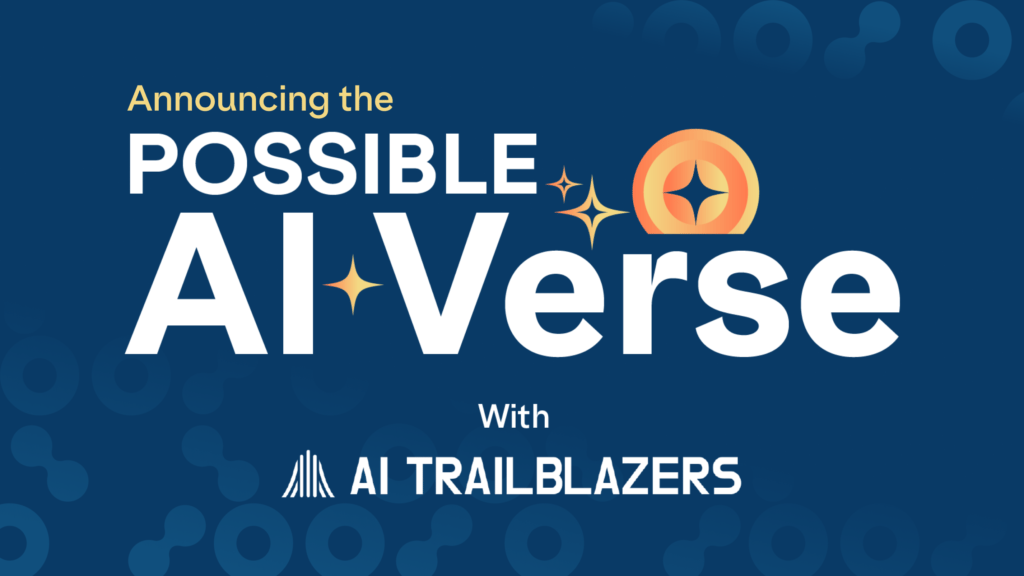
AI Trailblazers is partnering with POSSIBLE 2026 to build the AI-Verse stage, a dedicated experience designed to be on the same caliber as our AI Trailblazers Summits. As part of this collaboration, AI Trailblazers will take center stage at the newly created AI Verse at the Fontainebleau, the heartbeat of the event, April 27 to 29 in Miami Beach, Florida.
It’s a universe where marketers and innovators can not only explore what’s next in AI but also shape it responsibly and strategically. We’re welcoming speakers, partners, and guests who are shaping this space to join us. Please contact us to learn more.
What is AI Trailblazers?
AI Trailblazers is a vibrant platform dedicated to uniting corporate marketers, technologists, entrepreneurs, and venture capitalists at the forefront of artificial intelligence (AI). Our mission is to fuel growth, innovation, and career development among our members, who all want to be at the forefront of incorporating artificial intelligence into their businesses and their lives for strategic advantage. More information here.