- AI Trailblazers
- Posts
- Navigating AI: Rebuilding How Companies Work and Grow
Navigating AI: Rebuilding How Companies Work and Grow

AI isn’t just reshaping technology. It’s forcing organizations to rethink how they work, grow, and compete. Across industries, companies are discovering that the real impact of AI isn’t confined to automation or productivity gains. It’s changing hiring patterns, rewriting marketing operating models, and redefining how brands create relevance in an increasingly complex digital environment. From workforce dynamics to marketing orchestration and personalized engagement, the common thread is clear: AI is less about tools and more about redesigning the systems that drive growth.
AI Trailblazers is partnering with POSSIBLE 2026 to launch the AI-Verse Stage, a dedicated experience built to match the caliber of our AI Trailblazers Summits. Located next to the Inspiration Stage at the Fontainebleau, the AI-Verse will run April 27–29 in Miami Beach and serve as a hub for the most forward-thinking conversations in marketing and AI.
The AI-Verse is designed to be a place where marketers don’t just hear about the future of AI, they experience it firsthand and learn how to apply it responsibly and strategically inside their organizations.
We’re inviting speakers, partners, and industry leaders who are shaping this space to join us in Miami. Reach out to learn more about participating in the AI-Verse. Please contact us to learn more.
The AI Jobs Story Isn’t Boom or Bust. It’s a System Reset.
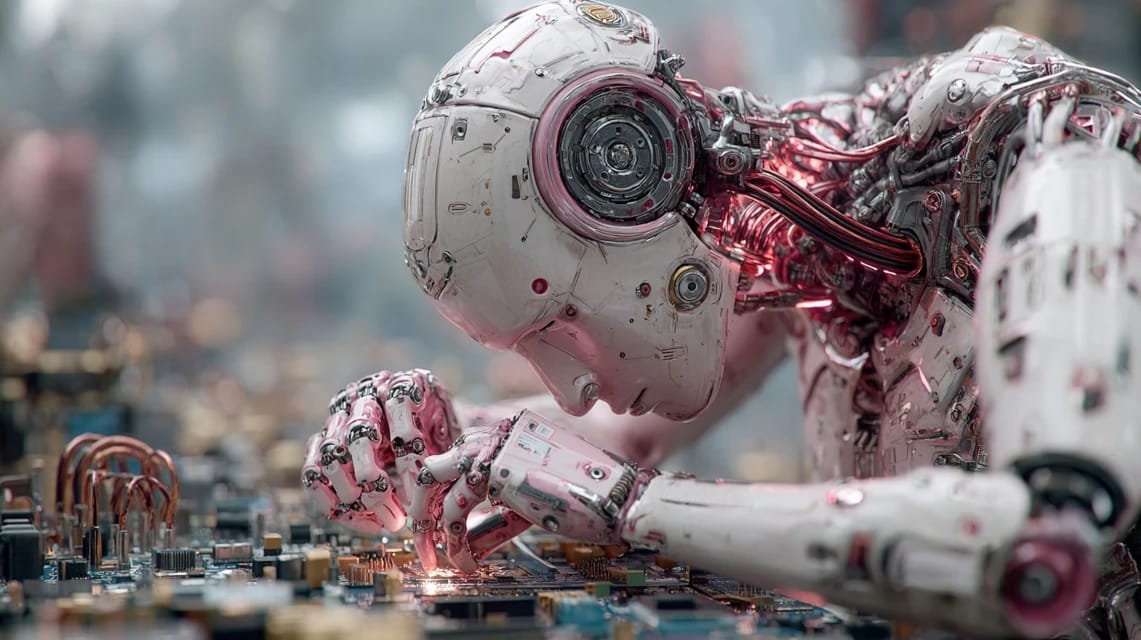
According to Finance.Yahoo.com, Every technological shift rewrites the relationship between work, growth, and the economy. AI appears to be doing it faster than most. Companies are discovering they can generate more output without adding the same number of employees, while the massive infrastructure required to power AI is creating entirely new labor shortages and job categories. The result isn’t a simple story of jobs disappearing, but a far more complex reshaping of where work happens, what skills are valuable, and how organizations scale.
AI is breaking the traditional link between revenue growth and hiring.
Historically, companies needed more employees to generate more revenue. AI tools are allowing businesses to increase productivity and output without expanding headcount at the same pace. Executives from companies like Snowflake and Shopify say AI is helping teams produce more results with smaller workforces.The AI boom is creating massive demand for skilled trades.
Building the infrastructure behind AI requires enormous physical investment in data centers, power systems, and networking equipment. This surge is creating shortages of electricians, engineers, construction workers, and other technical trades needed to build and operate AI facilities. Companies like CoreWeave and Nvidia warn that the supply of these workers is far below what the industry needs.New job categories are emerging alongside automation risks.
Rather than eliminating labor entirely, AI is expected to reshape the kinds of roles companies need. Businesses are beginning to hire positions such as chief AI officers, AI governance leaders, and compliance specialists to manage adoption responsibly. Many other jobs that don’t yet exist will likely emerge as organizations integrate AI into core operations.AI investment is reshaping the economy and corporate spending priorities.
Tech companies are pouring hundreds of billions into AI infrastructure, with estimates suggesting trillions in future investment. This spending boom is driving economic growth in sectors like construction, energy, and data infrastructure, while also pushing companies to cut costs elsewhere, including payroll. The result is a labor market in transition, where some roles shrink while entirely new industries and professions expand.
AI Trailblazer Takeaways: People keep trying to force the AI story into a simple headline: jobs vanish or jobs boom. Reality, irritatingly, refuses to cooperate. What’s actually happening is a structural shift where productivity rises without proportional hiring, even as entirely new labor demands appear elsewhere in the system. The advantage won’t belong to the companies predicting the future of work, but to the ones redesigning their organizations fast enough to operate inside it.
Faster Marketing Won’t Fix Broken Marketing.

According to The Drum.com, Marketing has spent decades optimizing pieces of the machine while ignoring how the machine actually works. Brand, pricing, media, and commerce have evolved into separate engines, each chasing its own metrics and tools, often without coordinating with the others. AI may accelerate execution, but speed only exposes the underlying problem faster. The real opportunity isn’t automating marketing tasks, it’s orchestrating the entire system so decisions reinforce each other instead of competing for attention.
Marketing suffers from fragmentation across functions and decisions.
Brand, pricing, media, loyalty, and commerce are often managed separately with different platforms, KPIs, and teams. This siloed structure creates friction in decision-making and leads to inconsistent customer experiences. As a result, messaging, incentives, and pricing frequently pull in different directions rather than reinforcing a unified strategy.Automation alone doesn’t fix marketing’s underlying coordination problem.
Many companies are using AI to automate tasks like content creation, media optimization, and personalization. While this improves efficiency, it doesn’t address the deeper issue of disconnected decisions across the marketing system. Without coordination, automation can actually accelerate fragmentation instead of improving performance.AI-driven consumer journeys demand greater strategic coherence.
AI-powered search and digital interfaces compress discovery, evaluation, and purchase into a single interaction. In this environment, inconsistent brand signals become visible faster and hurt decision-making earlier in the customer journey. Brands that align pricing, messaging, experience, and loyalty around a clear point of view are easier for both humans and AI systems to interpret.The future of marketing requires orchestrated systems, not isolated tactics.
Marketing needs infrastructure that coordinates decisions across demand generation, commerce, and loyalty as a connected ecosystem. Platforms like Empathy Lab’s Growth OS aim to use agentic AI to align decisions rather than simply automate tasks. The companies that win will focus less on producing more activity and more on designing systems where every decision reinforces the others.
AI Trailblazer Takeaways: Marketing has never lacked activity. It has lacked alignment. AI will make campaigns faster, content cheaper, and optimization more precise, but none of that matters if the underlying system remains fragmented. The real competitive advantage will belong to organizations that treat marketing as a coordinated ecosystem rather than a collection of disconnected tactics.
From Shouting to Understanding: Marketing’s AI Reset.

According to Fastcompany.com, Marketing used to compete on reach. Now it competes on relevance. Buyers expect brands to understand their context, timing, and needs before a message ever reaches them, yet most marketing organizations are still built for mass campaigns rather than individualized engagement. As data multiplies and resources shrink, AI is emerging as the infrastructure that allows companies to deliver personalization at scale while keeping campaigns coordinated, consistent, and economically viable.
Relevance has become marketing’s biggest competitive challenge.
Today’s buyers expect highly personalized marketing, with nearly 60% of B2B customers expecting tailored engagement during research and 66% expecting it at purchase. Basic personalization like inserting a name or industry no longer cuts through crowded channels. Delivering real relevance requires deep context, coordination, and continuous iteration across campaigns.Human-led personalization struggles to scale in modern marketing environments.
Marketing teams face shrinking budgets and resources while customer data spreads across dozens of platforms. Manually researching prospects and tailoring messaging becomes increasingly difficult as complexity grows. This often results in fragmented campaigns, inconsistent messaging, and lower efficiency.AI helps unify data and automate personalization at scale.
AI can aggregate fragmented customer data, continuously update customer profiles, and feed insights directly into campaign execution. Companies like Together AI and Klarna are using AI-driven systems to personalize outreach, improve engagement, and reduce marketing costs. In Klarna’s case, AI helped reduce marketing spend by 11% while expanding campaign capabilities.AI-driven automation enables faster, more coordinated marketing operations.
Traditional marketing workflows often take weeks to assemble campaigns across data, creative, and distribution channels. AI allows teams to adapt messaging quickly, scale content across languages and markets, and maintain consistent brand messaging. This shift turns marketing from a headcount-dependent function into a scalable growth engine capable of operating at speed and global scale.
AI Trailblazer Takeaways: Marketing spent decades perfecting the art of shouting louder. Now the game is understanding better. The brands that win won’t be the ones blasting more campaigns into the void, but the ones using AI to translate fragmented data into real context and timely relevance. In a world where attention is scarce, the real advantage isn’t reach. It’s knowing exactly why someone should care.
Quote of the Week
“We have only just begun this buildout. Trillions of dollars of AI infrastructure still need to be built.”
— Jensen Huang
Magnificent 7
Links of the Week
Morgan Stanley sees AI jobs surge in 3 areas related to AI—even though there’s not enough revenue yet (finance.yahoo.com)
AI is reshaping demand – but marketing is out of sync (thedrum.com)
How AI rewires the modern marketing machine (fastcompany.com)
The End of ‘AI Tourism’ in Healthcare (buisness.columbia.edu)
Why investors won’t know what to make of AI for a while (economist.com)
Generative AI is Ready Now. Are Your Marketing Operations? - WSJ (deloittle.wsj.com)
Morgan Stanley warns an AI breakthrough Is coming in 2026 — and most of the world isn’t ready (finance.yahoo.com)
Autonomous Agent Hacked McKinsey's AI in 2 Hours (bankinfosecurity.com)
AI in marketing: The shift from novel to necessary (marketingbrew.com)
Europe’s second chance on AI: building an opportunity in factories, labs, and the real economy (finance.yahoo.com)
I'm a CMO who thinks AI has brought a long-overdue reckoning for top marketers. Here's how I'm adapting. (buisnessinsider.com)
Partner with AI Trailblazers
AI Trailblazers is partnering with POSSIBLE 2026 to build the AI-Verse stage, a dedicated experience designed to be on the same caliber as our AI Trailblazers Summits. As part of this collaboration, AI Trailblazers will take center stage at the newly created AI Verse at the Fontainebleau, the heartbeat of the event, April 27 to 29 in Miami Beach, Florida.
It’s a universe where marketers and innovators can not only explore what’s next in AI but also shape it responsibly and strategically. We’re welcoming speakers, partners, and guests who are shaping this space to join us. Please contact us to learn more.
What is AI Trailblazers?
AI Trailblazers is a vibrant platform dedicated to uniting corporate marketers, technologists, entrepreneurs, and venture capitalists at the forefront of artificial intelligence (AI). Our mission is to fuel growth, innovation, and career development among our members, who all want to be at the forefront of incorporating artificial intelligence into their businesses and their lives for strategic advantage. More information here.
1