- AI Trailblazers
- Posts
- Redefining Board Leadership with AI
Redefining Board Leadership with AI

The boardroom is no longer insulated from the AI revolution reshaping every other function of the enterprise. What was once a domain governed by experience, instinct, and closed-door deliberation is now being challenged by real-time data, predictive modeling, and algorithmic scrutiny. As complexity accelerates and stakes rise, directors are confronting a new reality: governance itself must evolve. The shift from gut instinct to predictive intelligence isn’t optional, it’s redefining what credible leadership looks like at the highest level.
AI Trailblazers is partnering with POSSIBLE 2026 to build the AI-Verse stage, a dedicated experience designed to be on the same caliber as our AI Trailblazers Summits. As part of this collaboration, AI Trailblazers will take center stage at the newly created AI Verse at the Fontainebleau, the heartbeat of the event, April 27 to 29 in Miami Beach, Florida. You want to be there!
It’s a universe where marketers and innovators can not only explore what’s next in AI but also shape it responsibly and strategically. We’re welcoming speakers, partners, and guests who are shaping this space to join us. Please contact us to learn more.
From Gut Instinct to Predictive Intelligence: The AI Boardroom Shift

The boardroom has long been the final fortress of instinct, experience, and executive intuition. But as markets accelerate and complexity compounds, that model is being stress-tested says Fast Company. AI is not just adding another dashboard to the table, it’s redefining how decisions are validated, how risks are anticipated, and who is qualified to lead. What’s emerging is a new era of governance where foresight, fluency, and data-driven accountability are becoming core board competencies.
AI is reshaping the boardroom from intuition to intelligence. For decades, directors relied on experience, anecdotes, and pattern recognition to guide high-stakes decisions. As business complexity accelerates, AI is exposing blind spots and pushing boards toward evidence-based governance.
Data-driven validation is replacing unchecked gut instinct. AI can rapidly analyze customer behavior, competitive shifts, and historical outcomes to test strategic assumptions in real time. Leading boards now require AI-backed analysis alongside traditional reports, forcing a new standard of accountability.
Predictive intelligence is extending the governance time horizon. AI models can forecast churn, simulate market disruptions, and evaluate strategic scenarios before they unfold. This shifts board conversations from reactive, quarterly reviews to proactive, long-term foresight.
Board composition and skills must evolve. Traditional experience alone is no longer sufficient, as directors now need fluency in data governance, algorithmic bias, and digital operating models. Forward-thinking companies are adding AI oversight structures and education programs to ensure boards can critically guide strategy in an AI-powered era.
AI Trailblazer Takeaways: AI is quietly changing the power dynamics of leadership. When real-time data can challenge legacy assumptions in seconds, authority shifts from tenure to evidence. The boards that thrive won’t abandon experience, but they will augment it with predictive intelligence and digital fluency. In the next decade, the competitive edge won’t just be smarter products, it will be smarter governance.
Breakthrough or Bravado? Modern AI Theater

AI has always carried a touch of theater says the Globe and Mail. From early automata that dazzled royal courts to today’s billion-dollar startups, the line between breakthrough and bravado can blur quickly. As headlines alternate between world-changing promises and existential fears, it’s worth asking what’s truly autonomous and what still relies on human hands behind the curtain. This moment calls not for cynicism, but for clear-eyed scrutiny as the technology evolves.
AI hype often masks human intervention and exaggeration. The article draws parallels to the 18th-century “Mechanical Turk,” a fake chess-playing automaton secretly operated by a human. Similarly, some modern AI breakthroughs are overstated, with human labor or hidden assistance playing a larger role than advertised.
Recent examples reveal gaps between claims and reality. Builder.ai collapsed after it was revealed that much of its “AI-built” software relied on human workers, while Waymo’s supposedly autonomous vehicles use remote human support in complex situations. These cases highlight how marketing narratives can overstate technological independence and create misplaced confidence.
Public and investor reactions often swing between alarmism and credulity. Concerns about AI singularity or job apocalypse frequently gain traction, even when evidence is thin or misunderstood. Instances like bots appearing “self-aware” on social platforms were later attributed to regurgitated training data, not genuine machine consciousness.
The core lesson is to approach AI with informed skepticism. While AI is advancing rapidly and will likely reshape industries, its capabilities and timelines remain uncertain. Overhyping progress may distort public understanding and policy decisions, making it essential to distinguish real breakthroughs from bravado and illusion.
AI Trailblazer Takeaways: The real risk in AI isn’t just overreach, it’s misplaced belief. When marketing outpaces mechanics, trust becomes fragile and expectations distort strategy, policy, and investment. Healthy skepticism doesn’t slow innovation, it strengthens it by forcing clarity about what’s automated, what’s augmented, and what’s still human. In an era of rapid progress, discernment may be the most valuable capability of all.
Automate with Caution: When Efficiency Starts Eroding Equity
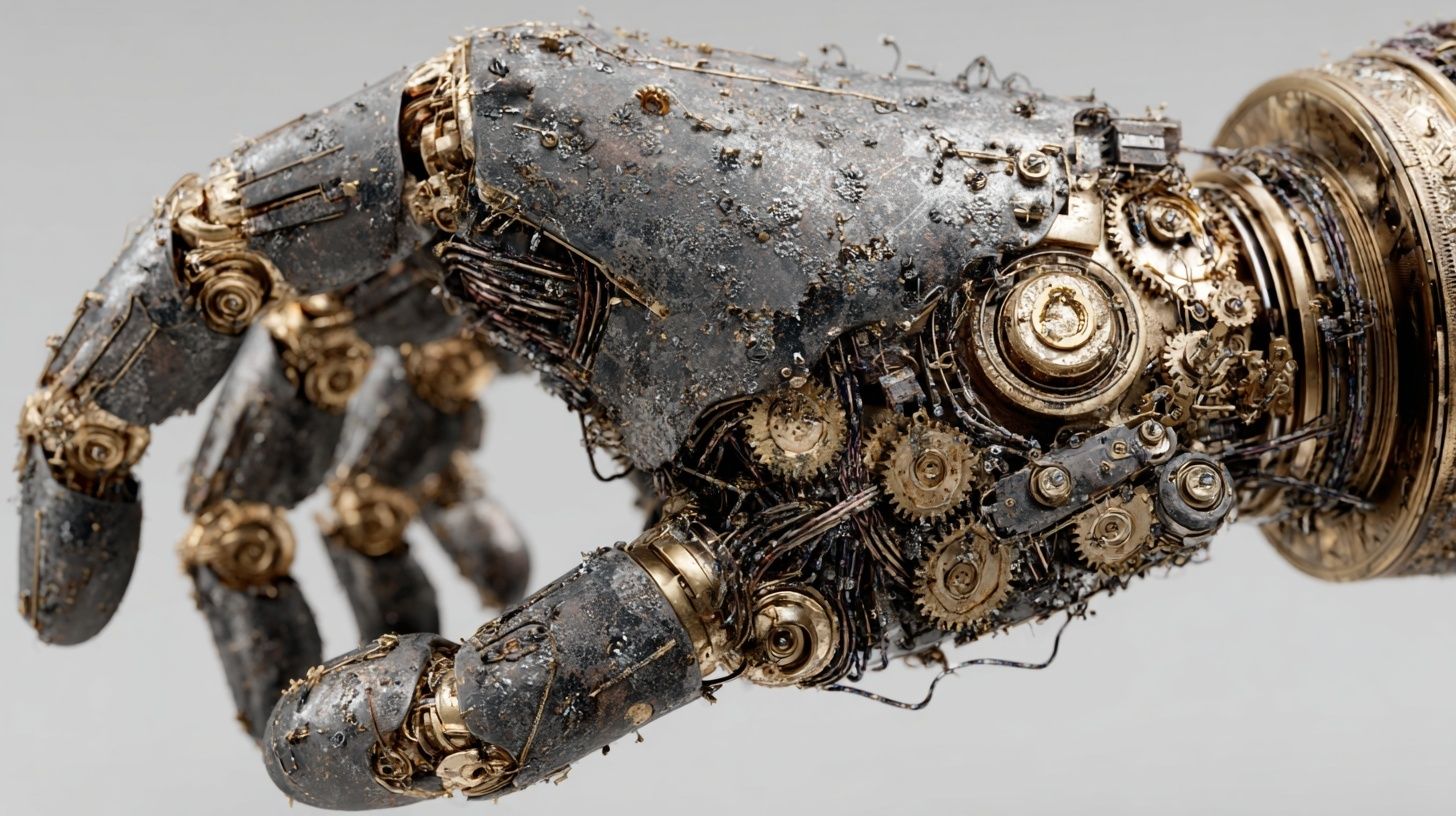
AI has made marketing faster than ever, but speed without strategy is a fragile advantage. As organizations rush to automate campaigns, optimize funnels, and improve near-term metrics, a deeper question is emerging beneath the dashboards. What looks like efficiency can quietly reshape brand meaning, customer trust, and long-term value. The real challenge is not whether to use AI, but how to use it without surrendering the human judgment that protects the brand says Forbes.
AI is a powerful marketing accelerator, but its impact depends on how it’s used. When applied thoughtfully, it enhances efficiency, creativity and execution. When deployed carelessly, it can damage trust, weaken brand equity and force costly course corrections, as seen in contrasting examples like McDonald’s AI drive-thru struggles and Mango’s more balanced AI campaign approach.
The real risk isn’t automation itself, but unexamined automation. Marketing teams often focus on what can be automated quickly to boost short-term KPIs like click-through rates or lower CAC. In doing so, they may remove human judgment from critical touchpoints, quietly eroding retention, trust and long-term customer value.
AI amplifies existing strategic priorities, for better or worse. If an organization prioritizes short-term efficiency over long-term differentiation, AI will accelerate that bias. Without clear governance and intentional boundaries, automation can gradually replace judgment in areas where brand coherence and customer relationships are most fragile.
The competitive advantage lies in deciding what should never be automated. Leading brands use AI to augment human insight, not replace it, maintaining control over strategy, messaging and ethical considerations. The future of AI-driven marketing won’t be defined by how much is automated, but by how clearly organizations define the non-negotiable role of human judgment.
AI Trailblazer Takeaways: AI doesn’t create strategy, it magnifies it. If your organization is clear about its brand promise and long-term value drivers, AI becomes a force multiplier. If it isn’t, automation will quietly scale the wrong priorities faster than ever. The real competitive edge isn’t maximum deployment, it’s disciplined restraint about where human judgment must remain in control.
Structure Is Strategy: Rebuilding the Org Chart for the AI Era

Marketing is not being incrementally upgraded, it is being structurally rewired says Shiv Singh in AdWeek. AI is reshaping how work is created, how value is captured, and how leadership is measured, often faster than organizations are prepared to respond. What looks like productivity acceleration on the surface is actually a deeper shift in identity, operating models, and competitive advantage. The real divide is no longer between companies that use AI and those that do not, but between those that reorganize around it and those that simply bolt it on.
Marketing roles and identity are being destabilized before org charts catch up. AI is compressing middle-layer functions like product marketing, strategy, and media planning, creating confusion rather than immediate layoffs. As AI handles drafting, testing, and iteration at scale, the core question shifts from job replacement to redefining what human expertise and leadership truly mean.
AI capability is accelerating faster than organizational adaptation. While executives acknowledge AI’s rapid progress, most marketing teams still treat it as a tooling upgrade rather than an operating model shift. This gap between compounding AI performance and incremental planning risks leaving traditional organizations stalled in the middle of AI maturity.
Trust, creativity, and discovery are all being reshaped at once. Monetized AI interfaces introduce ethical risk directly into marketing, while AI-generated content floods the market and compresses the value of “good enough” ideas. At the same time, AI-driven answer engines are disrupting search economics, shifting value from ranking pages to being the source models cite.
The winners will redesign workflows and leadership, not just adopt tools. AI-native organizations operate through connected, agentic systems with humans supervising rather than executing every step. As execution becomes automated, leadership judgment, strategic clarity, and disciplined trade-offs will become the primary performance differentiators in the AI era.
AI Trailblazer Takeaways: The biggest mistake companies will make is mistaking acceleration for transformation. Plugging AI into yesterday’s org design only amplifies yesterday’s inefficiencies. The advantage will go to leaders who rethink decision rights, talent models, and workflow architecture from the ground up. In the AI era, structure is strategy, and the org chart may matter more than the toolset.
Quote of the Week
“Rather than replacing workers, AI will serve as a tool to enhance human capabilities—making individuals smarter, more efficient, and more impactful.”
— Narendra Modi, Prime Minister of India, at the India AI Impact Summit on February 19, 2026.
Links of the Week
The boardroom is opening its doors to add a new member (fastcompany.com)
Globe editorial: Pay attention to what’s behind the AI curtain (theglobeandmail.com)
AI Is Getting Scary Good at Making Predictions (theatlantic.com)
What Recruiters Are Seeing as AI Transforms Marketing Teams (marketingprofs.com)
Scientists Found AI’s Fatal Flaw—The Most Advanced Models Are Failing Basic Logic Tests (popularmechanics.com)
AI Coding Tools for Knowledge Work: What Executives Need to Know (sloanreview.mit.edu)
DeepMind's CEO said there are still 3 areas where AGI systems can't match real intelligence (businessinsider.com)
Agentic AI, explained (mitsloan.mit.edu)
The AI industry has a big Chicken Little problem (mashable.com)
Hannah Fry: AI isn't as powerful as we think (newscientist.com)
The AI Market Crash Is Just Getting Started (seekingalpha.com)
Partner with AI Trailblazers
AI Trailblazers is partnering with POSSIBLE 2026 to build the AI-Verse stage, a dedicated experience designed to be on the same caliber as our AI Trailblazers Summits. As part of this collaboration, AI Trailblazers will take center stage at the newly created AI Verse at the Fontainebleau, the heartbeat of the event, April 27 to 29 in Miami Beach, Florida.
It’s a universe where marketers and innovators can not only explore what’s next in AI but also shape it responsibly and strategically. We’re welcoming speakers, partners, and guests who are shaping this space to join us. Please contact us to learn more.
What is AI Trailblazers?
AI Trailblazers is a vibrant platform dedicated to uniting corporate marketers, technologists, entrepreneurs, and venture capitalists at the forefront of artificial intelligence (AI). Our mission is to fuel growth, innovation, and career development among our members, who all want to be at the forefront of incorporating artificial intelligence into their businesses and their lives for strategic advantage. More information here.